Expedition Thread 03 · Responsible Wildlife Viewing
Encounters at a respectful distance
To watch a wild animal in its own element—unaware of your presence, expending zero extra energy on vigilance or flight—is one of the deepest privileges of outdoor travel. Yet the rise of close-up social media photography has placed heavy pressure on seal haul-outs, seabird ledges, and alpine rutting grounds.
Our approach treats observation as an art of stillness and optical reach. Throughout this guide, we keep wildlife welfare guidance strictly separate from transport and hide logistics so neither gets overlooked.
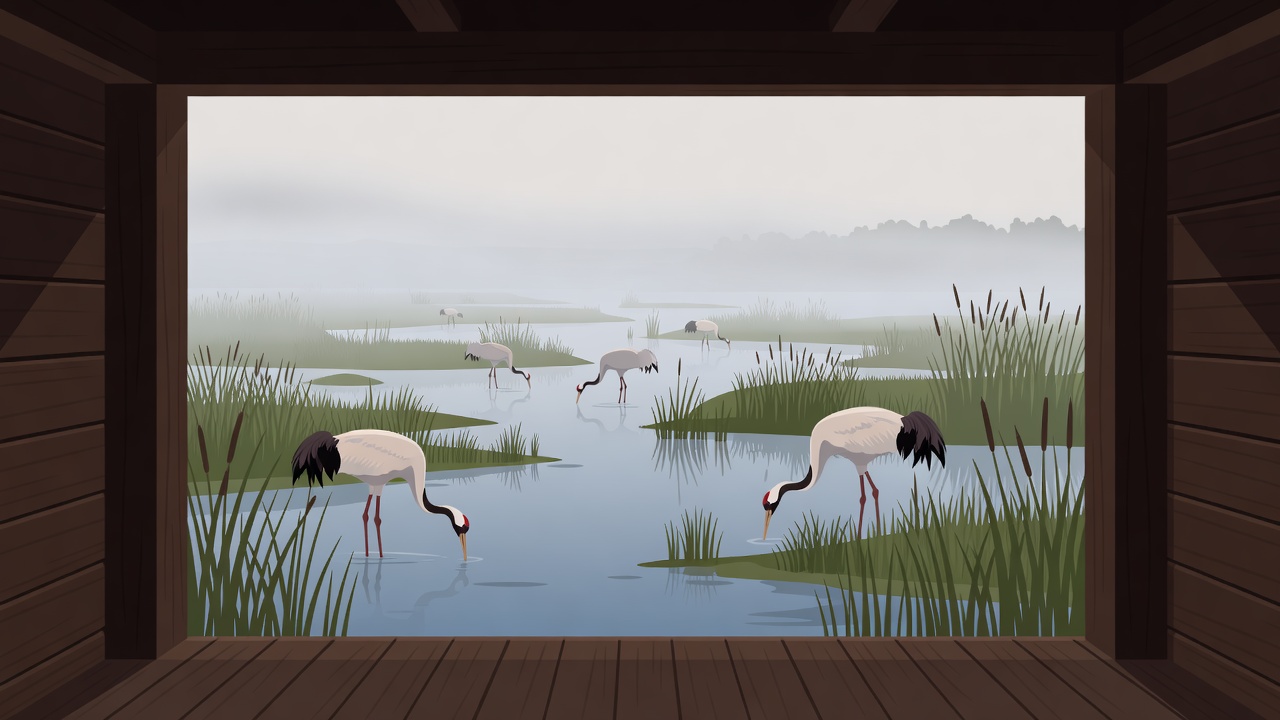
Vector habitat diagram: Recessed reed-bed observation blinds at Lake Hornborgasjön during the spring crane migration in Sweden.
Reading Body Language
How to Recognize Before You Intrude
Wild birds and mammals signal discomfort long before they bolt or take wing. Learning the "head-up" alert posture is the single most valuable skill an outdoor traveller can cultivate:
Wildlife Welfare Protocol (In the Field)
- The Rule of Thumb: Extend your arm fully and hold up your thumb; if your thumb cannot completely cover the large mammal (bear, moose, elk, muskox, seal), you are dangerously close and must back away slowly.
- Seal Haul-Out Signals: On rocky skerries, if even two or three grey or harbour seals lift their heads and stare at your kayak or footpath, pause immediately and angle away. Flushing a pregnant female or nursing pup over sharp barnacles causes severe injury and energy loss.
- Ground-Nesting Birds: If an oystercatcher, lapwing, or Arctic tern begins repetitive alarm calling or feigns a broken wing, you are standing within metres of camouflaged eggs. Retrace your exact footsteps onto bare rock or tide-line sand.
Access, Optics & Hide Logistics
- Optics Over Footsteps: A pair of waterproof 8x42 roof-prism binoculars (for forest and twilight) or a compact 65 mm angled spotting scope (for estuaries and cliffs) eliminates the temptation to approach on foot.
- Hide Etiquette: Enter timber hides quietly, close viewing flaps after use so birds do not see human silhouettes backlit inside the structure, and keep camera shutters on silent electronic mode.
- Scent & Wind Direction: When watching red deer or Eurasian elk (moose) from valley tracks at dawn, check wind direction with a blade of grass; mammals detect human scent from over 500 metres upwind.
Four Exemplary Locations
Sanctuaries Designed for Low-Impact Viewing
| Sanctuary & Country | Key Species | Optimal Window | Welfare Infrastructure |
|---|---|---|---|
| Skomer Island NNR (Wales, UK) | Atlantic Puffin, Manx Shearwater, Short-eared Owl | May – July | Strict daily landing quota from Martin's Haven; roped paths protect underground burrows. |
| Lake Hornborgasjön (Västergötland, Sweden) | Eurasian Crane, Whooper Swan, White-tailed Eagle | Late March – Mid-April | Elevated viewing platforms at Trandansen and bookable overnight photography hides. |
| Dovrefjell–Sunndalsfjella NP (Norway) | Muskox (Ovibos moschatus), Wild Reindeer, Arctic Fox | June – September | Mandatory 200-metre statutory buffer around muskoxen; trail network out of Kongsvoll. |
| Parque Nacional Iberá (Corrientes, Argentina) | Capybara, Marsh Deer, Giant Anteater, Strange-tailed Tyrant | April – June & Sept – Nov | Wooden boardwalks and electric-motor or pole-driven lagoon skiffs out of Colonia Carlos Pellegrini. |
Field Journal Reflection
Why Twenty Minutes of Stillness Beats Four Hours of Marching
Many hikers cover 20 kilometres a day and wonder why they saw nothing larger than a meadow pipit. Because walking creates a continuous cone of vibration and movement, wildlife simply melts into heather or birch scrub ten minutes ahead of your boots. Try sitting against a drystone dyke or boulder for thirty minutes at first light with a flask of tea and binoculars resting on your knees. Within twenty minutes, the landscape resets: stonechats return to fence posts, roe deer step into the bracken clearing, and you experience the habitat as a guest rather than a passer-by.
Seasonal seabird monitor in Pembrokeshire and Varangerfjord since 2016.