
Expedition Thread 04 · Remote & Unusual Trips

Farther from the familiar

Some outdoor memories are forged not by climbing higher, but by stepping into landscapes with unfamiliar rules: walking across a black basalt sandur where glacial braided rivers shift their channels every week, drifting silently in an underground boat through a Slovenian karst canyon, or watching the Milky Way arch above a Scottish peat bog where no artificial light is visible on the horizon.

These unusual experiences ask for specialized preparation—whether that means cold-water immersion gear, two-way satellite beacons, or booking a six-person conservation slot months in advance.

Flat vector illustration of a remote Nordic wilderness hut beneath a starry night sky and aurora band in deep plum tones.

Vector night-sky diagram: Wilderness turf hut and boreal pine ridge modeled on Urho Kekkonen National Park, Finnish Lapland.

01

Three Extraordinary Landscapes

Unusual Terrains Worth the Preparation

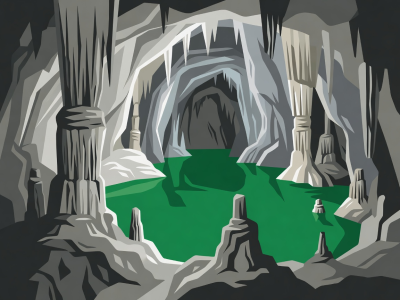
Flat vector illustration of a subterranean limestone cavern and emerald underground lake in Slovenia. Subterranean Karst

Križna Jama & Classical Karst, Slovenia

Unlike floodlit tourist caves with concrete walkways, Križna Jama preserves total natural darkness. Visitors wear rubber waders and carry rechargeable headlamps while rowing over fragile calcareous sinter dams that grow less than 0.1 mm per year.
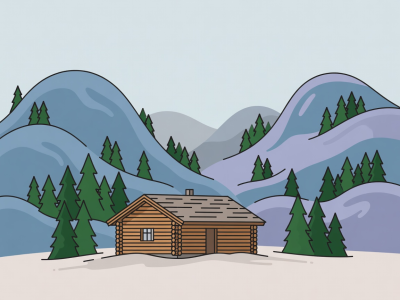

Flat vector illustration of a timber wilderness cabin surrounded by rounded fells in Finnish Lapland. Arctic Taiga & Fell

Urho Kekkonen Open Huts, Finland

Starting from Kiilopää or Saariselkä, walkers navigate gentle granite-gneiss fells (such as Sokosti at 718 m) using compass bearings and open log cabins equipped with woodstoves and dry firewood split by the previous traveller.

Flat vector illustration of the uninhabited Hornstrandir peninsula in Iceland's Westfjords. Roadless Peninsula

Hornstrandir Nature Reserve, Iceland

Accessible only by passenger boat from Ísafjörður or Bolungarvík, Hornstrandir has zero roads, shops, or permanent residents. Walkers carry all provisions across snow-streaked passes between Hornvík and Veiðileysufjörður.

02

The Finnish Hut Tradition

How the Autiotupa Etiquette Works

Finland's open wilderness hut system is one of the finest examples of mutual trust in the outdoor world. An autiotupa is never locked and requires no fee or reservation, provided you travel solely by foot, ski, or paddle. The unwritten code is simple and strictly observed:

  • The Last Arrival Always Gets Floor Space: No matter how full a cabin is during a blizzard, those who arrived earlier make room so the newest arrival can warm up and sleep indoors.
  • Dry Kindling for the Next Stranger: Before shoulder-strapping your pack in the morning, saw and split dry logs from the woodshed, whittle a handful of feather-sticks for tinder, and leave the water bucket empty so it cannot freeze solid and split.
  • Tent Backup Mandatory: Even when planning a hut route across Luirojärvi, always carry a storm-worthy shelter pad and sleeping bag in case huts are at capacity or fog halts your progress halfway across a fell.
03

Remote Self-Reliance

Communications, Water & Emergency Readiness

Off-Grid Navigation & Comms

  • Carry an Iridium-network satellite communicator (such as Garmin inReach) or a 406 MHz Personal Locator Beacon (PLB) registered with national rescue authorities.
  • In roadless zones like Hornstrandir, log your itinerary on SafeTravel.is (operated by ICE-SAR, the Icelandic Association for Search and Rescue) and check in at emergency radio shelters.
  • Use red-light headlamps during Dark Sky observations in Galloway or Exmoor so your rod cells retain night adaptation over 30 minutes.

Fragile Cave & Tundra Protection

  • Before entering karst cave systems like Križna Jama or Škocjan, disinfect boots and tripod tips to prevent spreading subterranean fungal spores (such as Pseudogymnoascus destructans affecting bats).
  • Never touch stalactites or sinter pools; natural skin oils prevent calcium carbonate deposition permanently.
  • In Hornstrandir, store all food inside odour-proof bags inside your tent vestibule so Arctic foxes (Vulpes lagopus) never associate hikers with handouts.